
The Quiet Cup: A Field Guide to Calming Tea
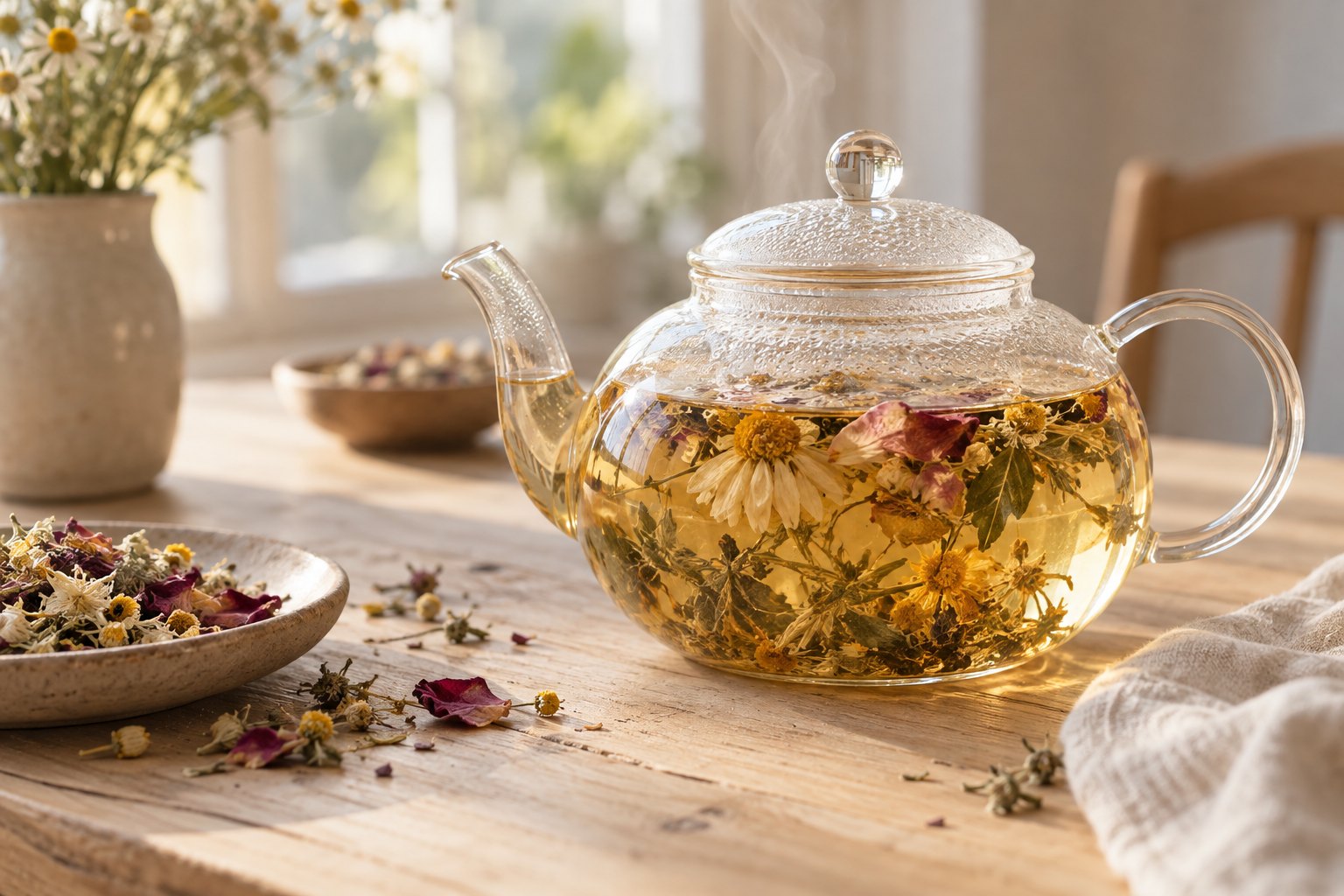
There is a particular hour, most evenings, when the day finally loosens its grip. The inbox has gone quiet, the dishes are done, and what remains is the simple question of how to come down gently. For centuries the answer, in kitchens all over the world, has been the same: put the kettle on. A calming cup is one of the oldest rituals we have — and one of the easiest to do well.
At Blooming Advice we think of a calming tea less as a remedy and more as a punctuation mark: a warm, deliberate pause that tells the body the day is over. What goes into the cup matters, but so does the act of making it. Here is how we think about both.
What makes a tea “calming”
The teas we reach for at night tend to share a few honest traits. They are naturally caffeine-free, so they will not quietly work against the wind-down you are after. They are gentle in flavour — floral, grassy, softly sweet — the kind of taste that invites a second, slower sip. And they carry warmth and aroma, which do most of the sensory work of relaxation. None of this is medicine. These are foods: plants people have steeped for generations simply because a warm, fragrant cup feels good at the end of a long day.
The classic four
If you are building a calming shelf from scratch, start here. Chamomile is the cornerstone — apple-sweet, faintly honeyed and forgiving of a long steep. Lavender adds a floral, almost violet note; use it with a light hand, as a little goes a long way and too much turns soapy. Lemon balm, a member of the mint family, brings a soft citrus lift that keeps a blend from feeling heavy. And peppermint or spearmint offers a clean, cooling finish that settles a full stomach after dinner. Any two of these together already make a cup worth looking forward to.
Roots, spices and a little sweetness
Beyond the florals, gentle warming ingredients round out an evening blend. A few slices of dried ginger or a pinch of turmeric give the cup body and a golden colour; a bruised cardamom pod or a short cinnamon stick lends the kind of cozy spice that pairs beautifully with milk. If a blend leans bitter, a spoon of honey stirred in after steeping softens every edge — added after, never during, so the heat does not scald away its character. This is also where a splash of warm oat milk turns a simple infusion into something closer to a nightcap.
Brewing it kindly
Calming teas are generous and hard to ruin, but a little care rewards you. Use fresh, just-boiled water for flowers and leaves — around 208°F — and give the cup a genuine five to seven minutes, longer than you would allow a delicate green. Cover the cup while it steeps so the aromatic oils stay in the water rather than drifting off into the room. Use a heaping teaspoon per cup, a little more if you like it assertive, and do not rush the strain. The waiting is part of the ritual, not an obstacle to it.
A blend to try tonight
If you want somewhere to begin, try this: two parts chamomile, one part lemon balm, half a part lavender and a single thin slice of dried ginger for warmth. Steep it seven minutes, covered, and finish with honey if the day earned one. It is soft, golden and faintly floral — a cup that asks nothing of you except that you slow down long enough to drink it.
A note on comfort
Some of the botanicals people fold into an evening cup — warming ginger, golden turmeric and gentle chamomile — have long been reached for to ease everyday aches and tension and to soothe the body at the close of a taxing day. We make no medical claims: this is a warm, calming ritual, not a remedy, and anything that genuinely hurts deserves a conversation with a doctor rather than a teapot.
The ritual does half the work
Here is the quiet secret of the calming cup: the leaf is only half of it. The warmth of the mug in your hands, the few minutes spent doing nothing but waiting, the deliberate choice to sit rather than scroll — these do as much as any botanical. Make the cup somewhere other than your desk. Use the good mug. Let the steam rise for a moment before the first sip. Treated this way, an ordinary infusion becomes a small, repeatable signal to yourself that the day is allowed to end.
A calming tea will not fix a hard day, and we would never pretend otherwise. What it can do is give you a warm, honest few minutes that are entirely your own — a quiet cup, made with good leaf, at the close of the day. That has always been the whole idea of this house.